Solar panels and an electric car: a good match
Charging with your own sunshine is the cheapest way to drive. How to make it work, even if the car is out all day.
· 4 min read
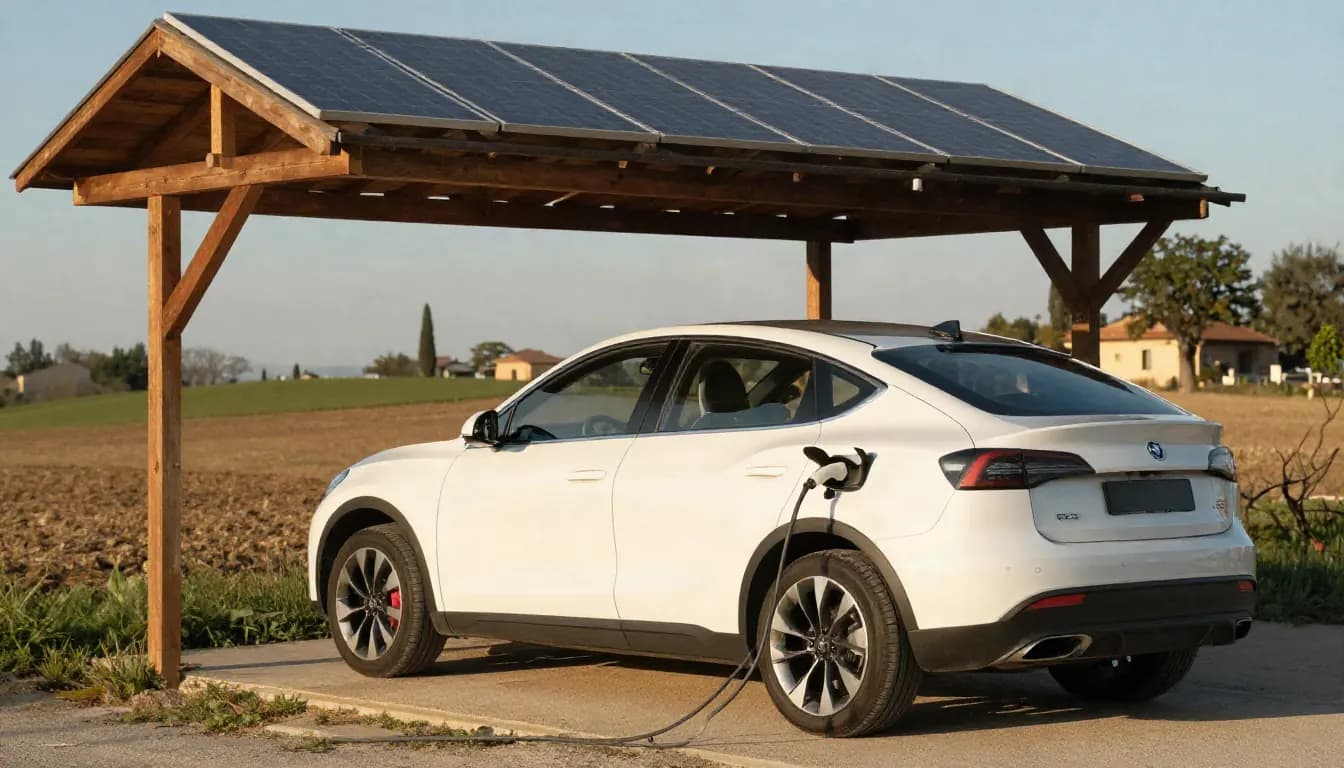
An electric car driven 12,000 km a year needs about 2,000 kWh of electricity. That is roughly what 1.5 to 2 kWp of solar panels make in a year. In other words: six or so extra panels can cover most of your driving.
The timing problem
The sun shines in the day. Many cars are at work in the day. There are three ways around it:
- Charge at weekends and on days at home. A smart charger can be set to use only spare solar power, so you never pay grid prices for it.
- Add a home battery. It fills up during the day and can top up the car in the evening. This works best for short daily trips.
- Charge at work. If your employer has solar carports, even better.
What a solar-ready charger does
A normal charger simply charges as fast as it can. A solar-ready charger watches how much power your panels make and how much your home uses, and sends only the spare power to the car. When a cloud passes, it slows down instead of buying from the grid.
Tips
- Plug in whenever you are home, even if the battery is not low. Small top-ups add up.
- Set a minimum charge level in the app for the mornings you need a full car.
- Leave space on the roof plan for extra panels if you are thinking of an EV in the next few years.
Our EV charging page shows the charger we install, and the free energy check can include your driving in the numbers.